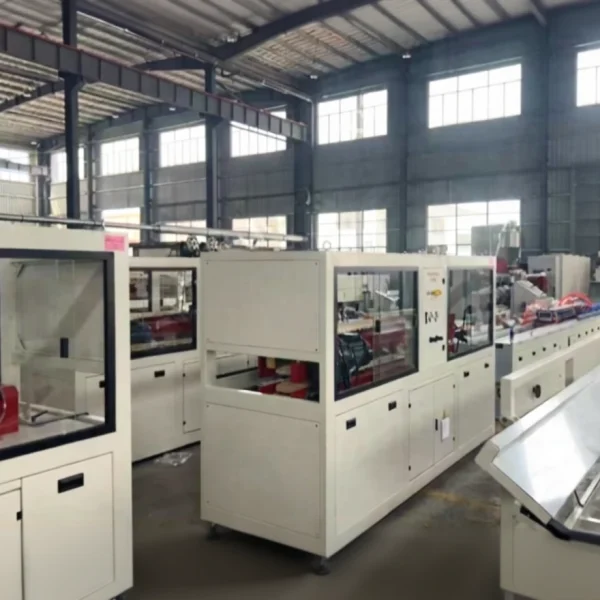



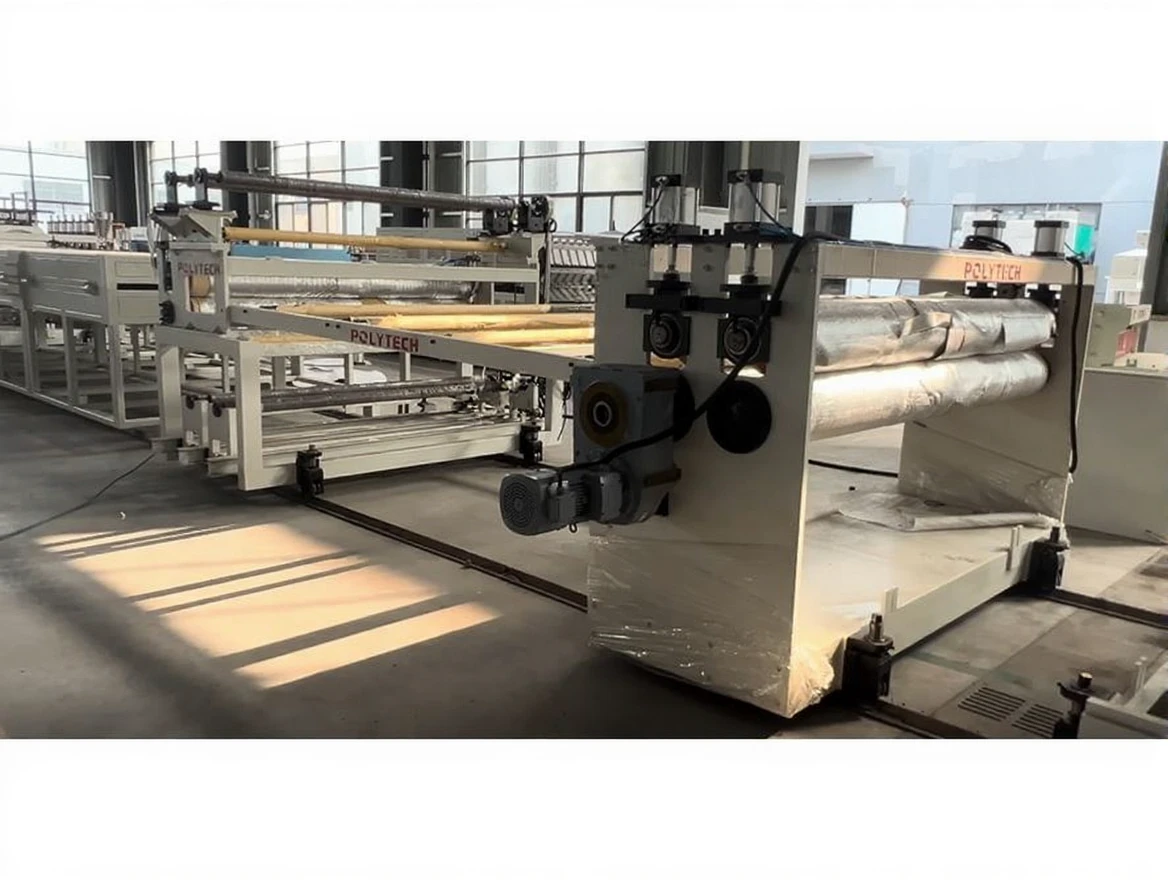
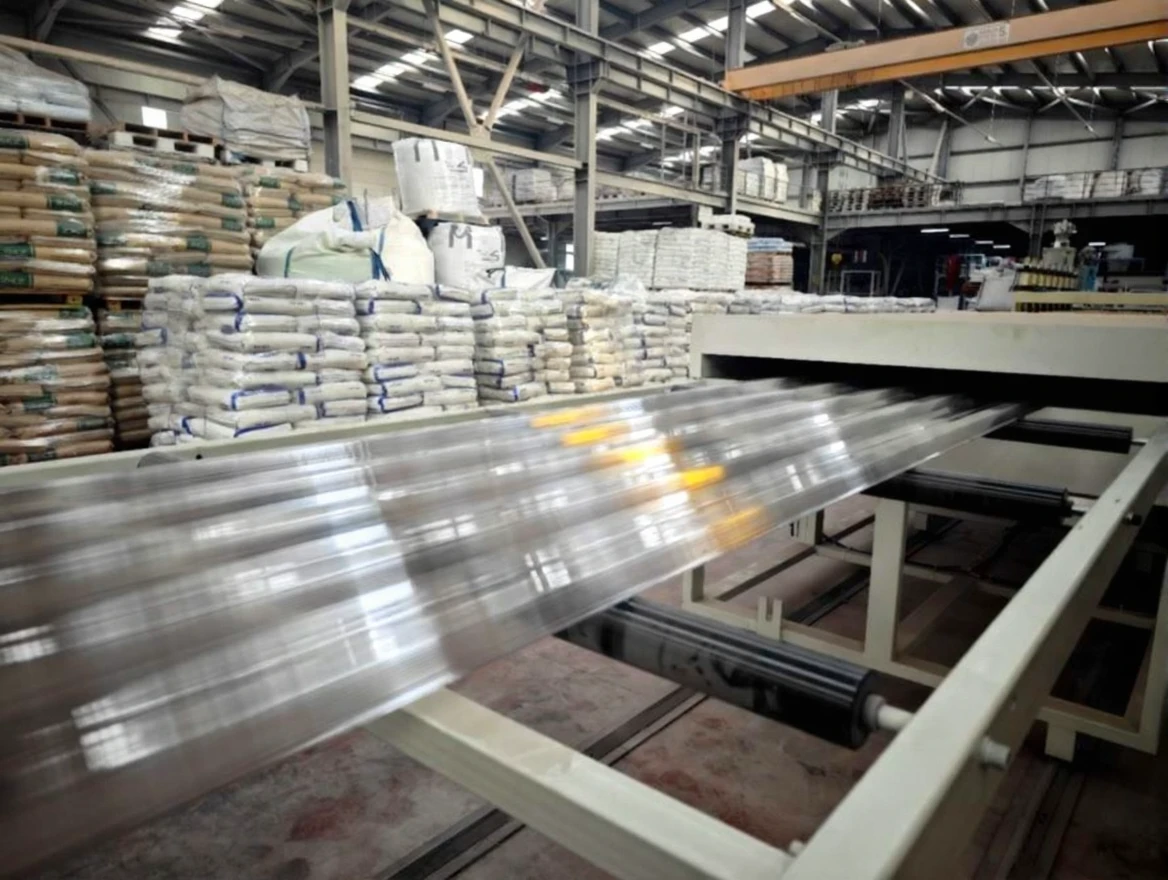
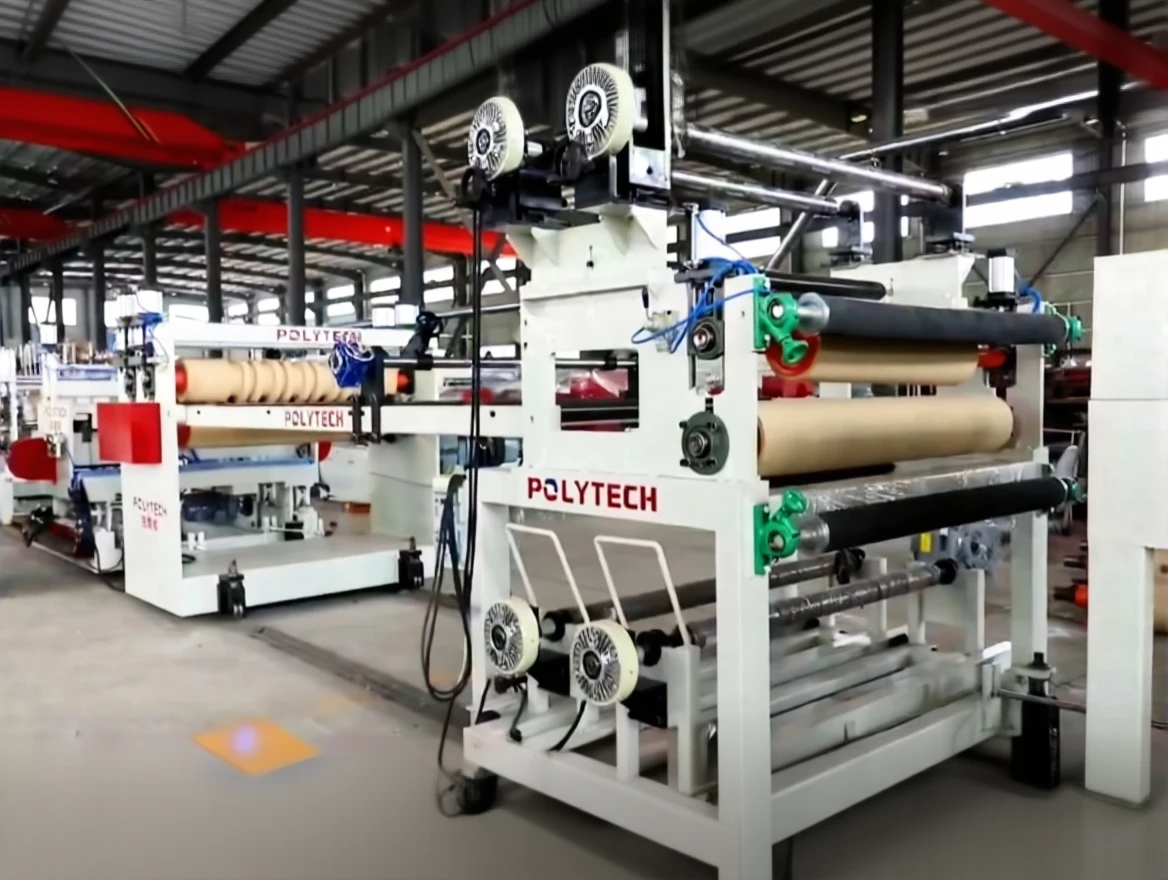
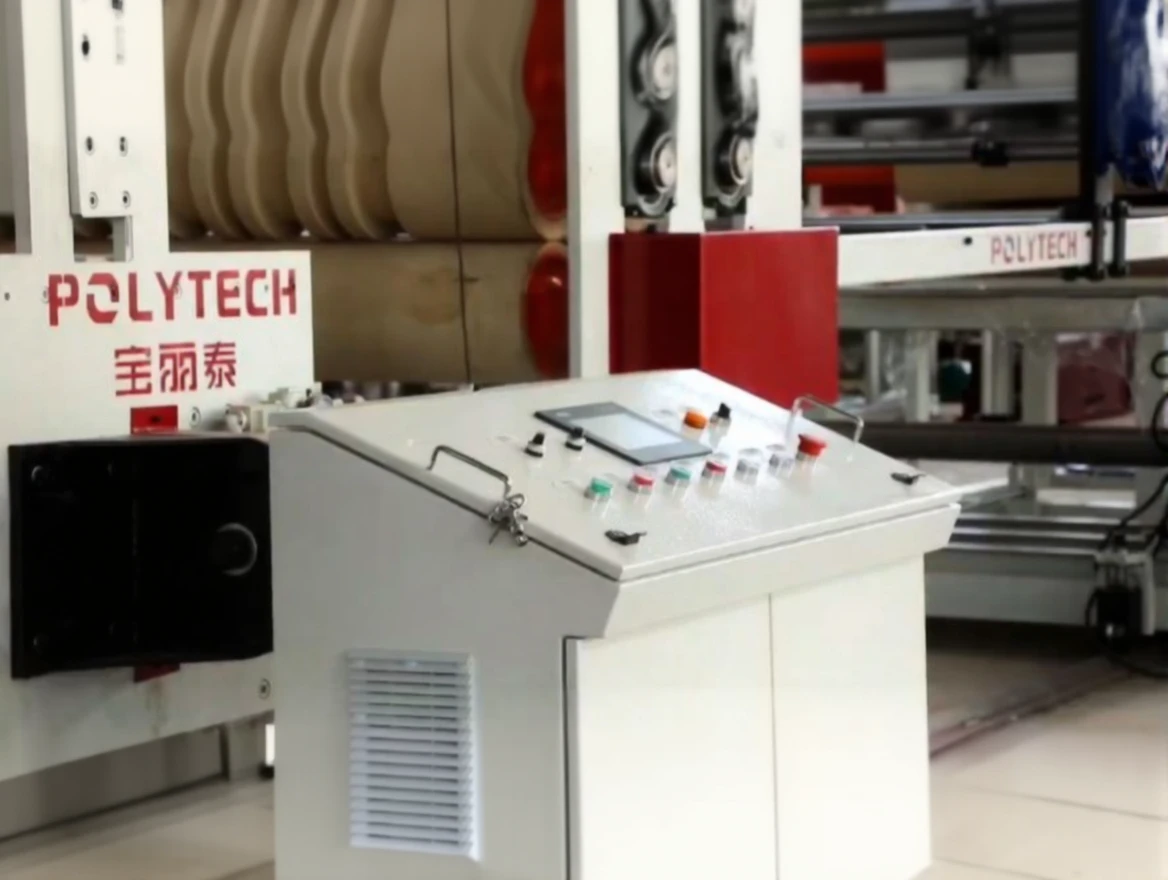
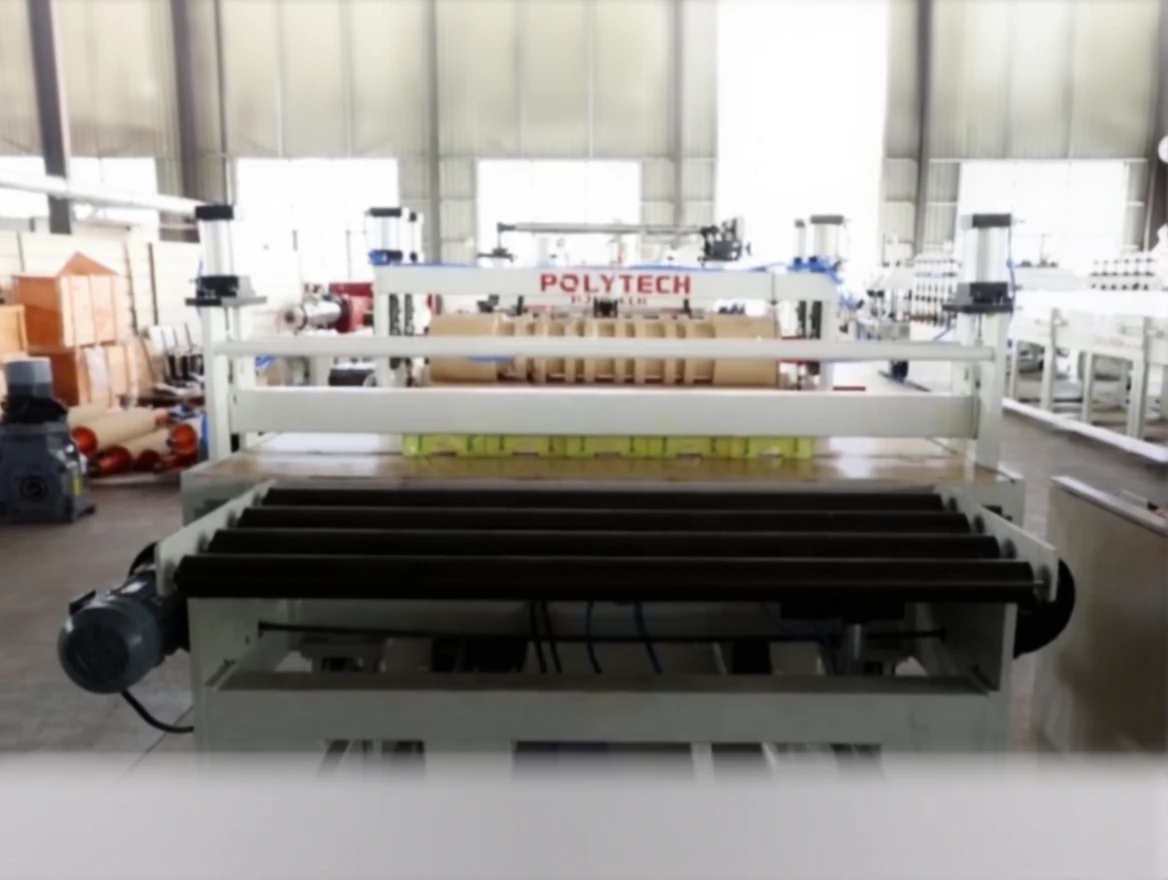
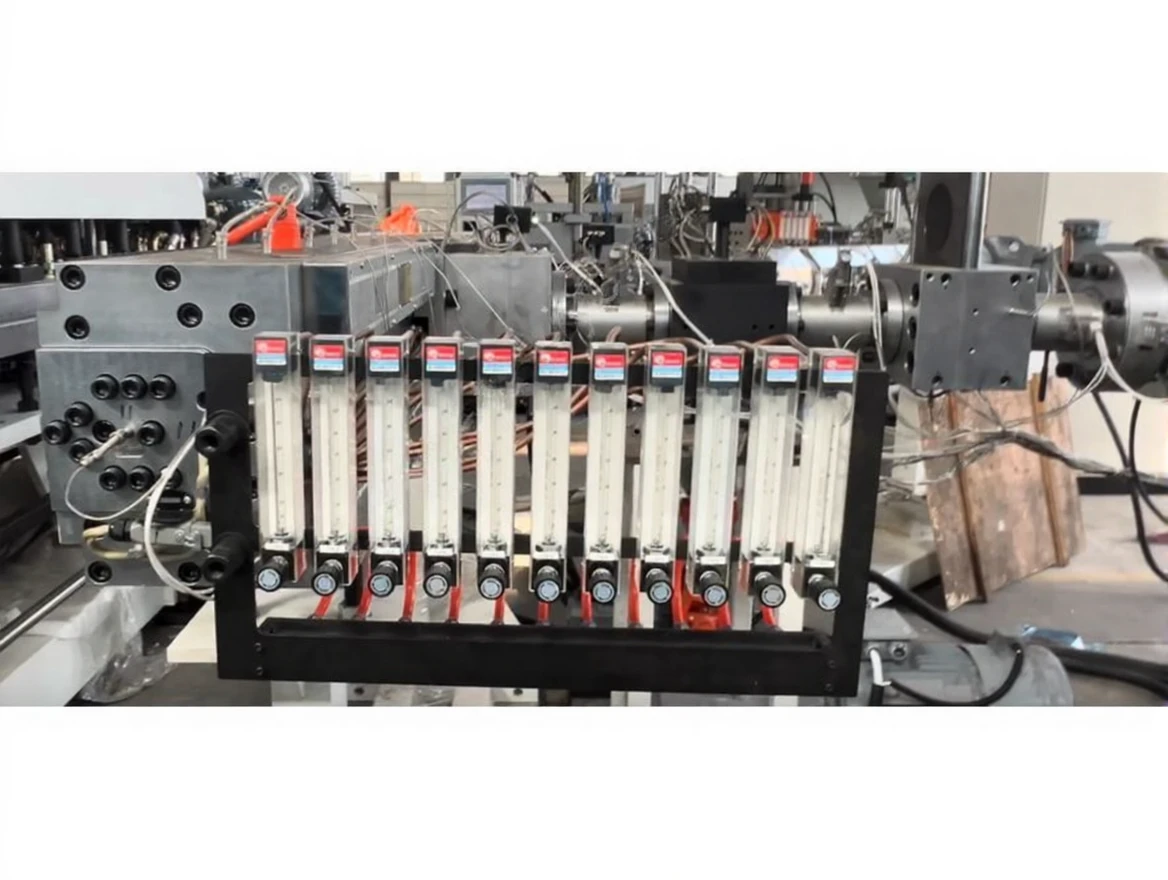
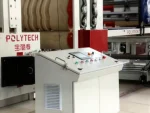
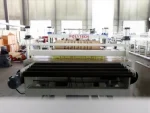
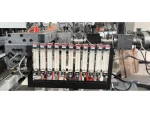
PC Corrugated Sheet Production Extrusion Machine
| Brand | Polytech |
|---|---|
| Model Type |
POE-001 |
PC Corrugated Sheet Production Extrusion Machine
PC Corrugated Sheet Extrusion Line is a production line that produces lightweight and durable polycarbonate sheets with a corrugated structure. The process involves melting polycarbonate granules, extruding them into the desired shape, and cooling them to form sheets. These sheets are commonly used in roofing, glazing, and other applications.
Features and Applications:
PC corrugated sheets are used in a wide range of applications such as roof cladding for greenhouses and ceiling windows, glazing for building windows, outdoor signage, lightweight barriers for office partitions, protective covers for machines, efficient lighting fixtures, and large aquarium panels. The extrusion machine used to produce these sheets includes precise temperature control for consistent melting, a highly efficient extruder for homogenous mixing, and customizable molds for various profiles. Additionally, it is equipped with advanced cooling systems for rapid solidification and automatic cutting and stacking mechanisms. These features increase productivity, versatility, and overall product quality.
Advantages of PC Corrugated and Solid Sheets:
- Lightweight: Half the weight of regular glass, making it easier for transportation and assembly, especially in tall buildings.
- Transparency: Provides excellent clarity and surface gloss, offering color options that soften sunlight.
- Noise Insulation: Effectively reduces noise, suitable for highway sound barriers.
- Heat Transfer: Lower thermal conductivity than glass, reducing heat loss to provide an environmentally friendly structure.
- Impact Resistance: Exceptional durability and impact resistance, maintaining integrity over a wide temperature range.
- Condensation Prevention: Prevents condensation under specific temperature and humidity conditions.
- Fire Retardant: Provides B1 fire resistance, self-extinguishing, and does not emit toxic gases.
- Chemical Resistance: Resistant to various acids and oils at room temperature, but sensitive to alkaline substances.
- Cold Bend Installation: Offers flexibility for hot and cold resistance.
These features make PC sheets ideal for construction and other applications.
Technical Specifications of PC Corrugated Sheet Production Extrusion Machine:
|
Model Item |
Specifications and Advantages |
|
20/30 Single Screw Extruder
45/30 Single Screw Extruder (For UV Coating) |
Maximum Output: 400 kg/h
Maximum Output: 50 kg/h |
|
Melting Pressure Pump |
Filter Plate Material: 38CrMoAl |
|
Extrusion T Die |
Die Width: 800 to 2100 mm |
|
Calibration Platform for Shaping Die |
Structure: Welded, adjustable height |
|
Pulling Machine (5 to 6 Groups) |
Pull Rollers: 6 pairs, Φ250*2300 mm |
|
Oven |
Specifications: 2200 x 5000 mm |
|
Lamination Film Device |
Number of Stations: Two |
|
Dual Group Pulling Machine |
Pulling Speed: 0–10 m/min |
|
Cutter |
Support: Two adjustable rollers before the blade, four adjustable rollers after the blade |
These technical specifications highlight the capabilities and efficiency of each machine component in the extrusion line, making the line adaptable to various production needs.
What is a PC Corrugated Sheet Extrusion Line?
PC Corrugated Sheet Extrusion Line is a specialized production system designed to produce polycarbonate (PC) corrugated sheets extensively used for applications requiring strong, lightweight, and transparent materials. These sheets consist of multiple layers or corrugated chambers offering excellent thermal insulation, UV resistance, and impact resistance.
Features of Polycarbonate Corrugated Sheet Machine
- High Extrusion Capacity: A highly efficient extruder for customizable sheet thickness, width, and length.
- Multi-Layer Mold Design: Produces multi-layer hollow sheets with an equal cell structure for improved insulation.
- Automatic Temperature Control: Provides precise heating and cooling for consistent sheet quality.
- Continuous Production and Cutting: Features automatic cutting for continuous extrusion and precise sheet lengths.
- Durability and Impact Resistance: Works with polycarbonate for strong, impact-resistant sheets; some machines apply UV coating to enhance durability against weather conditions.
- User-Friendly Control Panel: Offers a touch screen interface and automatic controls for easy operation.
- Vacuum and Pulling System: Ensures suitable sheet thickness and shape with vacuum calibration and consistent pulling speed.
Applications of Corrugated Polycarbonate Sheets
- Roofing and Cladding: Used for light diffusion, insulation, and UV protection in greenhouses, ceiling windows, industrial roof cladding, and outdoor coverings.
- Construction and Architecture: Ideal for building facades, partition walls, and sound insulation due to its strength and insulation properties.
- Signage and Advertising: Stands out in outdoor signs and backlit displays for advertising purposes with its durability and light transmission.
- Automotive and Transportation: Used for impact resistance and lightweight in vehicle windows, bus roofs, and transportation trailers.
Advantages of PC Corrugated Sheet Production
- Lightweight and Durable: High strength-to-weight ratio, easy to transport, assemble, and highly resistant to impacts.
- Excellent Insulation: Enhances energy efficiency by providing heat and sound insulation, reducing noise levels.
- UV Resistance: UV protective coating ensures long-lasting durability and prevents yellowing.
- Light Distribution: Allows natural light transmission and even distribution, ideal for greenhouses and ceiling windows.
Customizing Your PC Corrugated Panel Production Line
Customizing the PC corrugated panel production line involves adapting the production process, equipment, and parameters to meet specific product requirements and production goals. By optimizing these factors, manufacturers can increase productivity, improve product quality, and better respond to market needs.
The Production Process of Corrugated Polycarbonate Sheets
- Raw Material Preparation: Polycarbonate resin granules are mixed with additives like UV stabilizers and colorants.
- Extruder Setup: Granules are fed into an extruder where they are melted and mixed using a twin-screw system.
- Extrusion Process: The molten polycarbonate passes through a customized mold to create corrugated sheets. Multi-layer molds can be used for additional insulation.
- Cooling and Calibration: The sheet is cooled with water or air, then passed through vacuum calibration for uniform thickness and shape.
- Pulling and Tension Control: The sheet passes through a pulling system with consistent speed and tension to maintain flatness.
- Cutting and Length Control: The sheet is automatically cut to the desired lengths with precision.
- Surface Treatment: Optional UV or scratch-resistant coatings are applied to enhance durability.
- Quality Control and Inspection: Sheets are subjected to visual, dimensional, and mechanical tests to ensure compliance with quality standards.
- Packaging and Shipping: The final sheets are bundled, labeled, and shipped to customers.
Applications of Corrugated Polycarbonate Sheets
- Roofing and Cladding: Provides light transmission, insulation, and UV protection for ceiling windows, industrial roof cladding, and greenhouses.
- Construction and Architecture: Ideal for facades, partition walls, and sound barriers due to its durability and insulation properties.
- Agricultural Applications: Used in greenhouses and cold frames to protect plants while allowing sunlight and maintaining temperature.
- Signage and Advertising: Stands out in outdoor signs and backlit displays for advertising purposes with its light transmission and durability.
Advantages of Corrugated Polycarbonate Sheets
- Lightweight: Easy to transport, reducing labor costs.
- High Impact Resistance: Suitable for durable and demanding environments.
- Heat Insulation: Provides excellent temperature control, reducing energy costs.
- UV Protection: Offers long-lasting performance by preventing yellowing and degradation.
- Light Distribution: Allows natural light to pass evenly, reducing glare.
Understanding Polycarbonate Corrugated Sheet Prices
- Thickness and Size: Thicker and larger sheets are generally more expensive.
- Type of Polycarbonate: Multi-wall sheets and UV-protected ones are costlier.
- Surface Treatments: Special treatments like scratch-resistant or anti-reflective coatings increase prices.
- Brand and Manufacturer: Well-known brands may charge higher prices for better quality.
Maintenance of PC Panel Extrusion Equipment
- Regular Cleaning: Prevents blockages and ensures consistent production quality by cleaning the extruder barrel, screws, die, and cooling system.
- Lubrication: Reduce wear and ensure smooth operation by regular lubrication of moving parts such as the screw, gear case, and motor.
- Temperature Control: Monitor heating elements and temperature sensors for correct temperature regulation during extrusion.
- Extruder Calibration: Check alignment, speed, and pressure settings for maintaining sheet quality.
Additional Keywords for Natural Integration
- Corrugated polycarbonate panel production
- Polycarbonate corrugated sheet extrusion
- Lightweight PC corrugated sheets
- Corrugated sheet extrusion technology
- Cost-effective PC panel production
Related products
240 Mm Upvc High Performance Pvc Window Profile Extrusion Line (1)
In stock
| Brand | Polytech |
|---|---|
| Model Type |
YF240 |
32 mm – 63 mm Spiral Corrugated Hose Production Machine
In stock
| Brand | Alinplast |
|---|---|
| Model Type |
APM 32/63 |
50/100 Conical Extruder Waste Water Pipe Production Line
In stock
| Brand | Alinplast |
|---|---|
| Model Type |
APM Ø50/ Ø160 PS BH |
P6 Polyamide Automotive Parts Hose Production Machine
In stock
| Brand | Alinplast |
|---|---|
| Model Type |
APM 45 POPH |