


Stainless Modular Transfer Conveyor System
| Model Type |
FM3011 Serisi |
|---|
Fima Makina FM3011
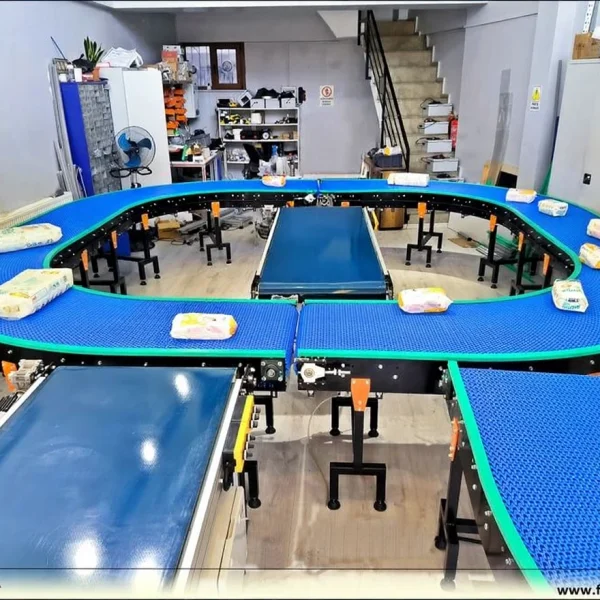
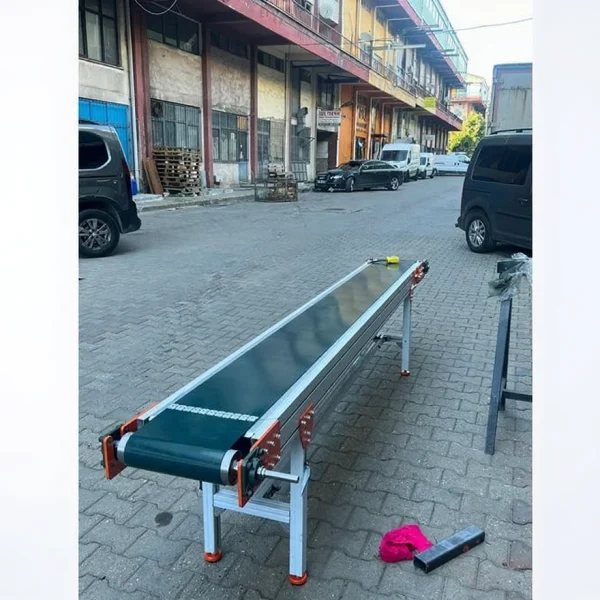
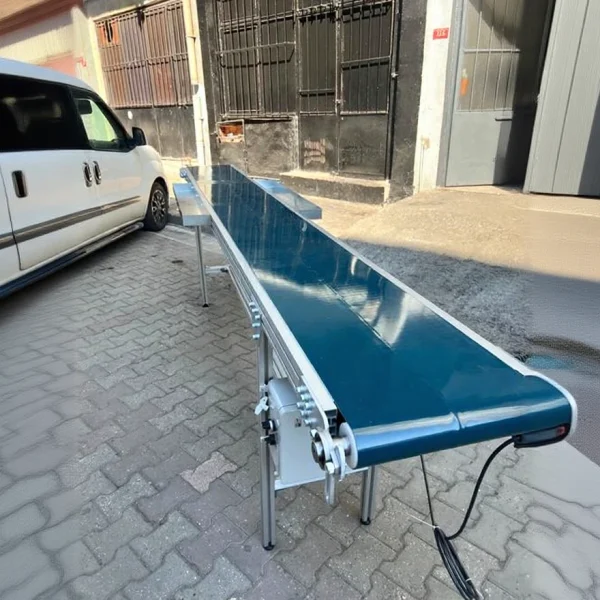
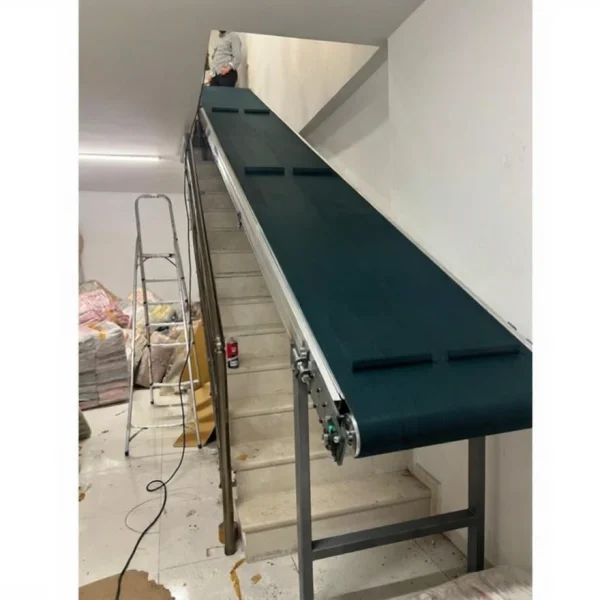
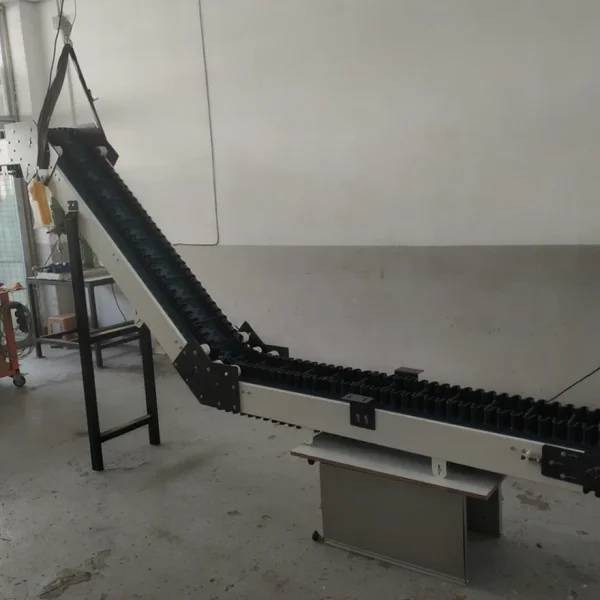
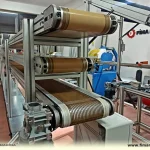
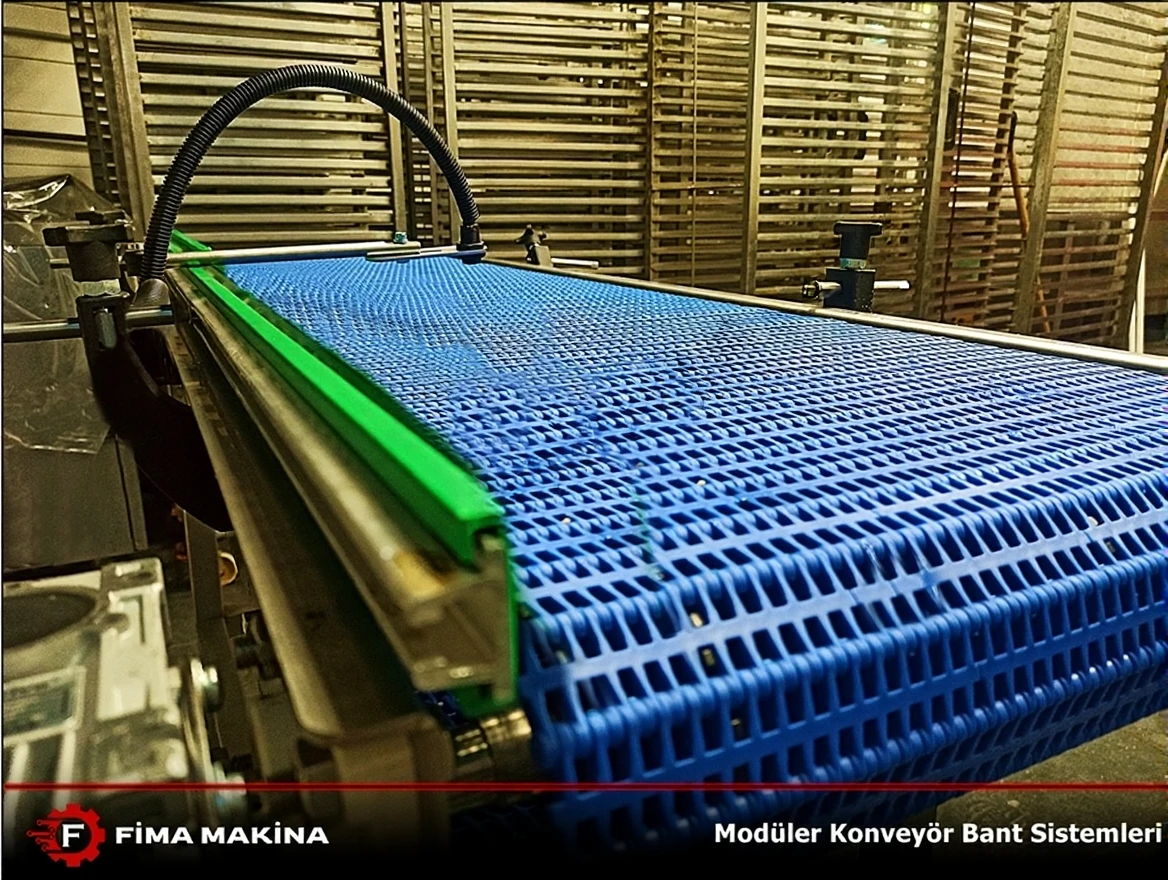
FM3011 L Type Conveyor System
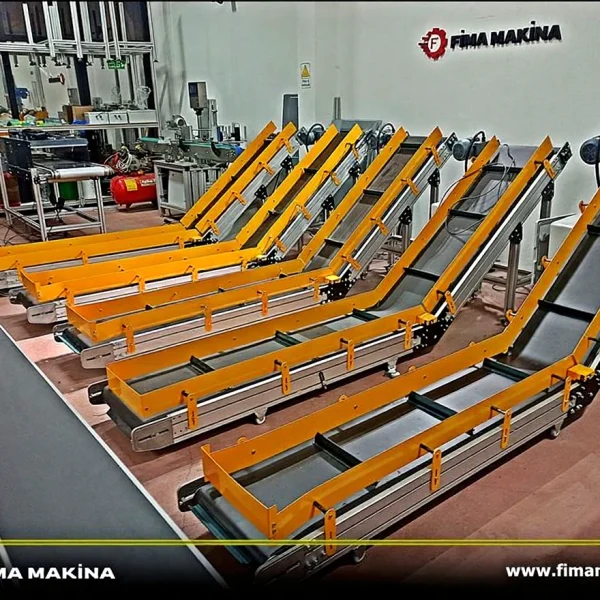
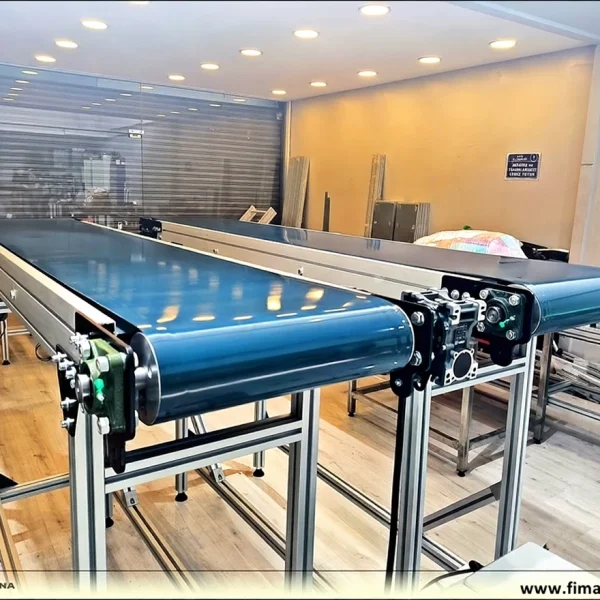
Belt selection is made according to the type of product to be transported and can be speed adjustable according to needs. It can be used as fixed height or adjustable units. They are general-purpose conveyors suitable for transporting all kinds of boxed, bulk, and packaged products.
Conveyor belt systems powered by a motor inside are preferred to be used in wide and spacious areas as they cannot be used in narrow areas. Before performing the transportation process with conveyor belts, it is extremely important to consider the material to be transported in the selection of these belts and to choose according to the motor power and the structure of the material to be transported.
Conveyor belts are preferred much more intensively than many transportation systems because they are extremely practical and robust. Nevertheless, one must always be prepared for possible risks, and the selection between belts and materials must be made correctly. Apart from this, conveyor belts are systems that carry out transportation processes without causing problems under many conditions.
Belted Flat Conveyor Systems, Graded Conveyor Systems, Turnable Modular Conveyor Systems, Miniature Conveyor Systems, Roller Conveyor Systems, Pallet Transport Conveyor Systems, Special Design Conveyor Systems, Automotive conveyors, Logistics conveyors, Chain Conveyors, Spiral Conveyors, Helical Conveyors, Food Conveyors, Assembly Line Conveyors, Wire Belt Conveyors, Marine Surface Cleaning Conveyor, Metal Belt Conveyors, Bean Belt Conveyors, Inkjet Conveyors, Accumulation Conveyor, In-Warehouse Conveyors, Vertical Conveyors, Recycling Conveyors, Detector Conveyors, Idle Roller Conveyors, PVC Belt Turn Conveyors, Drive Roller Conveyors, Roller Turn Conveyors, Modular Belt Turn Conveyors, Sorting conveyors, Hydraulic Feeding Elevators cater to many sectors.
FEATURES
- Conveyor Profile: 45×45-23×75-23×127 Aluminum Profile 6063
- Stainless steel
- Electrostatic Powder Coated
- Leg Profile: 45×45 Aluminum Sigma Profile 6063
- Stainless steel
- Electrostatic Powder Coated
- Conveyor Rollers: Ø45-Ø76-Ø114 Aluminum Drum
- Conveyor Height: Optional
- Belt: Optional – Green, Blue, White, Black
- Side Barrier: Optional
- Speed Control Panel: Optional
- Start – Stop Button: Optional
GENERAL TECHNICAL INFORMATION ABOUT PVC BELT
- Chinese name: pvc conveyor
- Material: Polyvinyl chloride
- Operating temperature: -10 ° – + 80 °
- Connection method: International threaded connection
First, according to the industrial application classification, PVC conveyor belt products can be classified as conveyor belts for the tobacco industry, logistics industry conveyor belts, packaging industry conveyor belts, printing industry conveyor belts, food industry conveyor belts, wood industry conveyor belts, food processing industry conveyors, entertainment industry conveyor belts, water industry conveyor belts, stone industry conveyor belts, etc.
Secondly, they can be classified according to performance: light climbing conveyor belts, high climbing conveyor belts, plus compartment lifting conveyor belts, vertical lifting belts, non-slip conveyor belts, sanding machine conveyor belts, wear-resistant conveyor belts, heavier material conveyor belts, lighter material conveyor belts, guided anti-running belts, perforated conveyor belts (suction fan belts), belt conveyor belts, spiral conveyor belts, twisting belts, very wide belt conveyor belts, sponge conveyor belt belts, corrugated conveyor belts, plus block conveyor belts, edge belt conveyor belts, groove conveyor belts, knife edge conveyor belts, etc.
Thirdly, according to product thickness and color research and development points, different colors (red, yellow, green, blue, gray, white, black, dark blue-green, transparent) can be produced, and the thickness of the product can be divided from 0.8′ to 11.5 MM for production and manufacturing.
Fourth, according to product pattern research and development points, grass pattern, herringbone pattern, diamond pattern, cross pattern, mesh pattern, inverted triangle pattern, horseshoe pattern, zigzag pattern, small dot pattern, diamond pattern, snake separable skin pattern, fabric pattern, large round table pattern, wave pattern, seesaw pattern, single line pattern, fine flat pattern, golf pattern, large square pattern, matte pattern, coarse pattern, checkered pattern, etc.
Fifth, PVC conveyor belt products can be classified according to fabric level: one fabric one glue, two fabrics one glue, one fabric two glues, two fabrics two glues, two fabrics three glues, three fabrics three glues, three fabrics four glues, four fabrics four glues, four fabrics five glues, five fabrics five glues, etc.
Sixth, PVC conveyor belt products can be classified according to temperature range: cold-resistant conveyor belts (below minus 40 °) and normal temperature conveyor belts (minus 10 ° to 80 °)
With the development of the popularity of the PVC conveyor belt market, various industrial fields have developed and implemented reasonable, scientific, and guaranteed constructive plans to varying degrees.
Product Features
- PVC conveyor belt has good flexibility and does not easily deform. It is made from high-strength, high-quality cotton, nylon, and polyester tarpaulin as the core. It is made from pure natural rubber and non-polluting compound agents that do not contain pollutants to obtain white or light colors, and it does not affect food hygiene odor coating. The formula design of PVC conveyor belt products is moderate in color, light, and durable. PVC conveyor belts are suitable for transporting food or food packaged in large quantities, canned, or packaged food up to large particle sizes of 400; hour.
PVC Overview
- PVC is actually a vinyl polymer material that is a non-crystalline material. PVC materials are usually added with stabilizers, lubricants, auxiliary processing agents, colorants, impact agents, and other additives in actual use. It has non-flammability, high strength, weather resistance, and excellent geometric stability. PVC is highly resistant to oxidizing agents, reducing agents, and strong acids. However, it can rust with concentrated oxidizing acids such as concentrated sulfuric acid, concentrated nitric acid, and is not suitable for contact with aromatic hydrocarbons or chlorinated hydrocarbons.
- Flame retardant performance
- Cylinder friction: the surface temperature of the drum is not more than 325 ° C
- Blow lamp burning: The flame duration of the test piece of full thickness of the burner is not more than 3.0S and the average coverage of the cover layer is not more than 5.0S.
- Propane burning: lossless length greater than 250 mm
- Surface resistance value: upper and lower average values not more than 3.0 × 10′
Application Area
- It is widely used in food, tobacco, logistics, packaging, and other sectors. It is suitable for underground transportation in coal mines and can also be used for material transportation in metallurgy and chemical industries.
Life expectancy factor
- Dense core with warp, weft filament, and covered cotton yarn;
- Immersion of a specially formulated PVC material to achieve a very high bonding strength between the core and cover rubber;
- Specially formulated cover rubber; thus ensuring that the belt is impact-resistant, tear-resistant, and wear-resistant.
When was the conveyor belt invented?
The original conveyor belt and conveyor belt were already in use in the 19th century. As early as 1892, Thomas Robbins began a leading series of inventions for the development of conveyor coal, ore, and other products. In 1901, Sandvik invented and began producing steel conveyor belts.
In 1905, Richard Satcliffe invented the first conveyor belt that completely changed the mining sector for coal mines.
In 1913, Henry Ford announced the conveyor belt assembly at the Ford Motor Company’s Highland Park, Michigan facility.
In 1972, the world’s longest flat belt conveyor was created in New Caledonia by REI.
The French society is a concept designer, Hyacynthe Marcel Boquet, with a length of 13.8 km.
In 1957, BF Goodrich received a patent to continue producing conveyor belt systems. The tire belt combines a half-twist that has a longer life than traditional belts, as it is subject to wear on all surface areas. Innocent modern seat belts can be made more durable by constructing several layers in their different materials because Mobius belts are now manufactured.
In the 17th century, the United States began using cable cars to transport bulk materials; in the 19th century, various modern conveyor belt conveyors emerged one after another. In 1868, belt conveyors appeared in the United Kingdom; in 1887, screw conveyors appeared in the United States; in 1905, steel belt conveyors appeared in Switzerland; in 1906, inertia conveyors appeared in England and Germany. Since then, conveyor belt conveyors have been influenced by technological developments in machine manufacturing, electrical engineering, chemistry, and metallurgy industries and have been continuously improved in the transfer of material support companies, even between cities, to complete the establishment within workshops. Mechanization and automation are an integral part of material processing systems.
Related products