



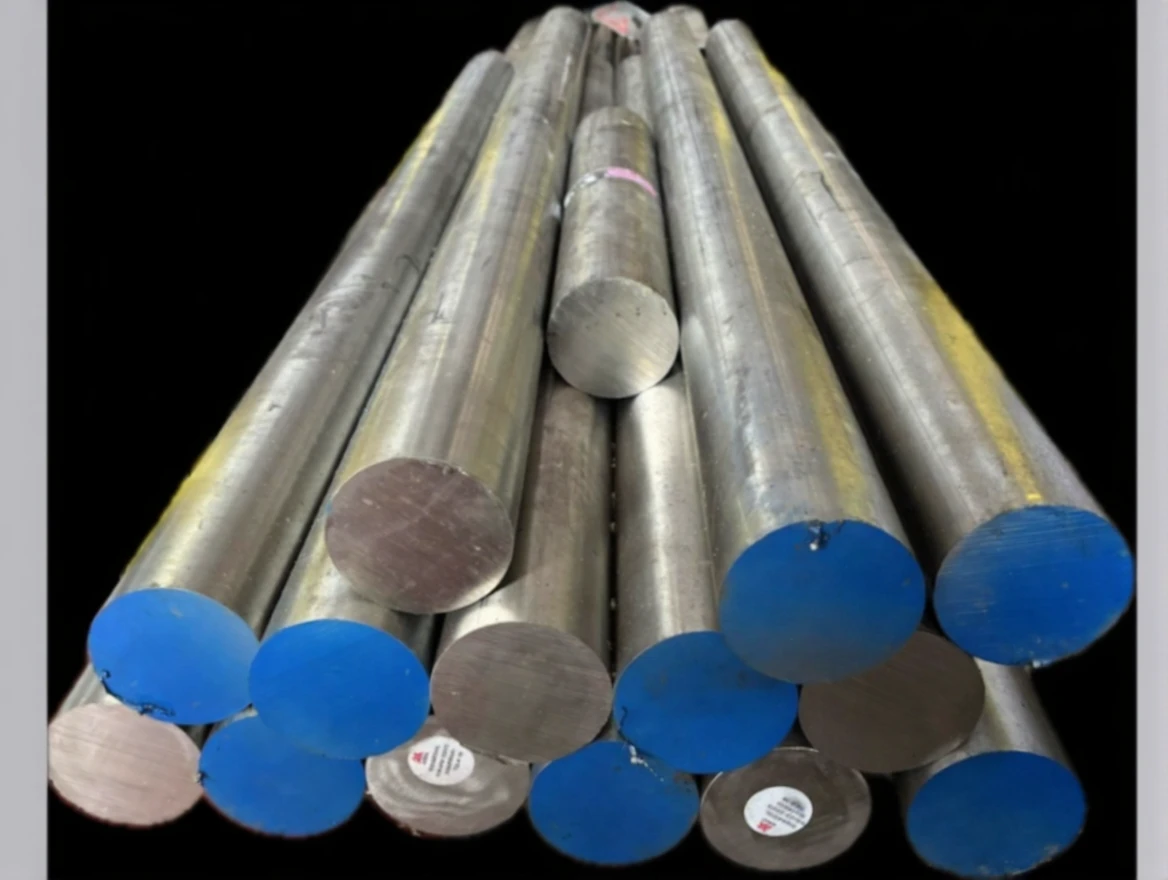
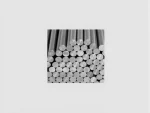
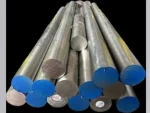
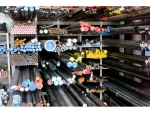
Stainless Steel Rods Between Ø 2-500 mm
| Brand | Multi Metal |
|---|---|
| Model Type |
M-MC-003 |
Description
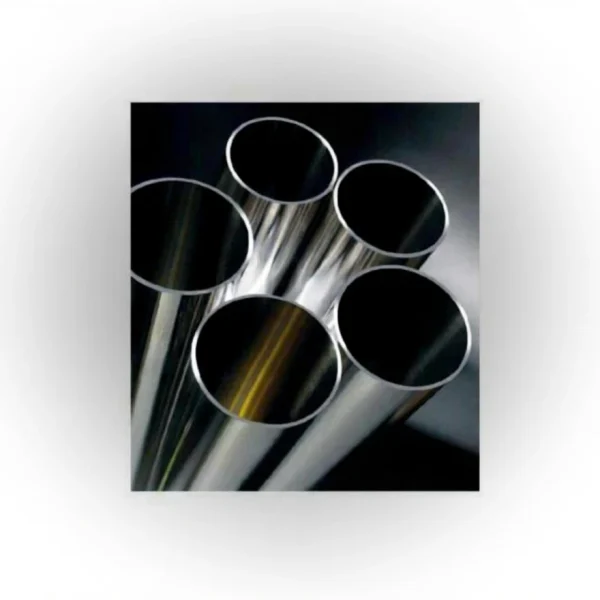
Ø 2-500 mm Stainless Steel Rod-Multi Metal
MULTI METAL has been serving in the industry for many years with its experience, service quality, and reasonable prices for our valued customers. As Multi Metal, we carry the rightful pride of making our mark in the industry. Our company, which has adopted price competitiveness and honesty as its principles, has become a distinguished name in its sector by adhering to total quality understanding and continuously researching, developing, and complying with quality standards. Our company works with all its energy to carry out its activities professionally and not to leave you in a difficult situation during and after the service. We continue to offer the most suitable products to the market according to our customers’ needs for products that are not available in our own inventory.
Stainless steel is a type of steel preferred for its resistance to rust. This type of steel contains chromium. The chromium in the steel forms a thin film layer called chromium oxide when the steel comes into contact with oxygen. This thin film protects the steel from rust. Additionally, the nickel added to the steel makes the stainless steel even more resistant to rust when combined with the chromium element.
303 Stainless Steel: 303 grade stainless steel is similar in composition to 304 grade. Simply put, we can say that 303 is the version of 304 grade with added sulfur. Sulfur helps break chips during processing, increasing machinability. On the other hand, sulfur reduces the material’s rust resistance. Therefore, 303 grade material has a worse rust resistance compared to 304 grade. This grade of material falls into the austenitic stainless steel group and does not hold a magnet, nor does it undergo heat treatment.
304 Stainless Steel: 304 grade stainless steel is the most commonly used type of stainless steel. With its 8% nickel and 18% chromium content, it is quite suitable for many environments. This stainless steel quality can be used in products such as forks, spoons, knives, all kitchen utensils, all decorative products, and in all outdoor environments. However, like every stainless steel, 304 grade material also has a limit to its strength and is not recommended for use in highly corrosive environments.
304L Stainless Steel: The only fundamental difference between 304L grade and 304 grade is the difference in the carbon content of both materials. The carbon content in 304L grade is quite low. In normal 304 grade, the range of carbon content is a bit wider. As the carbon content decreases in a material, its resistance to corrosion can increase somewhat. Additionally, low carbon increases the material’s ability to be welded to some extent. 304L grade material is generally preferred in plates and hexagonal materials.
316 Stainless Steel: 316 grade stainless steel is the second most commonly used austenitic stainless material after 304 grade. In addition to 304 grade, 316 grade contains more nickel. Along with the additional nickel, the molybdenum element, which is not present in 304, is also found in 316 grade, and both elements significantly increase resistance to rust.
316L Stainless Steel: The most important and perhaps the only difference between 316 grade stainless steel and 316L is the carbon content. The ‘L’ stands for low, indicating low carbon, and the carbon content of 316L stainless material is 0.03% or less.
316Ti Stainless Steel: 316 Ti grade stainless steel material is generally known as 4571 or 1.4571 and is searched for in this way. The titanium in its content makes the material more resistant to both corrosion and wear, and the incorporation of titanium into the material is very difficult due to its high melting temperature.
310 Stainless Steel: 310 stainless or 310 S grade stainless steel, as it is also known, contains a very high amount of nickel and chromium. Both elements are specially mixed in this material, and the combination of these elements allows the material to withstand very high temperatures.
420 Stainless Steel: 420 grade stainless steel is produced in many different versions based on the carbon content. For example, 1.4021 is 420 grade, while 1.4028 is a version of 420 grade stainless steel. There are three different versions of 420 stainless materials that are most commonly used and produced. The first is 1.4021, which is X20Cr13 type. The second is 1.4028, which is X30Cr13 type. The third version is 1.4034, which is X46Cr13 type. The only difference among all three 420 grades is the carbon content.
431 Stainless Steel: 431 or more commonly known as 4057 stainless steel grade is generally produced as QT800 or QT900 heat-treated. QT stands for quenched and tempered. A material with QT means it is heat-treated, and the number next to it indicates the minimum tensile strength the material has after heat treatment.
430 Stainless Steel: 430 stainless material has quite good polishing properties. This stainless steel grade, which holds a magnet, is not a very resistant material against rust. Due to its price advantage, this stainless steel grade can be preferred in places where corrosion resistance is not highly required, and it also has average values in terms of mechanical properties.
430F Stainless Steel: 430F grade stainless material is the version of 430 grade with added sulfur. The sulfur it contains allows the material to be processed quite easily. At the same time, this additive acts like oil during processing by breaking chips. 430F material is a stainless steel that can be processed even more easily than 303 grade.
1.4104 Stainless Steel: 1.4104 grade stainless material can be thought of as a higher carbon version of 430F, which is 1.4105 grade. 1.4104, which contains higher carbon than 1.4105 grade, can be heat-treated, and it is easy to process due to the sulfur it contains.
Duplex (1.4462) Stainless Steel: Duplex stainless steel (1.4462) is a duplex stainless steel quality with quite good rust resistance. Duplex material is also referred to as duplex and is known as 2205 grade. This quality stainless material is often confused with 316L duplex by being referred to as 316L duplex, but 1.4462 and 316L are completely different grades. The meaning of the term duplex is that this material is dual-phase, and it exhibits the properties of stainless steel materials in both different phase ranges.
630 Stainless Steel: 630 or more commonly known in the defense industry as PH 17-4 is a stainless steel quality with high mechanical strength, good corrosion resistance, surface hardness, and wear resistance, and it holds a magnet. This stainless steel quality can show almost identical rust resistance to 304 grade, and in terms of mechanical strength, it is nearly 3.5 times stronger than 304 grade in terms of yield strength. Similarly, the tensile strength of this stainless steel quality is more than twice that of 304 grade, and it can undergo heat treatment to become even harder and stronger. 630 is also referred to as 1.4542.
440M Stainless Steel: 440M grade stainless is a relatively new stainless steel quality. Developed by the French company Ugitech and produced solely by Ugitech, this stainless steel quality is known throughout Europe as an advanced version of [ PHONE HIDDEN ]) and [ PHONE HIDDEN ]) grades. This material contains much less carbon (50% less than its counterparts). As a result, the material can be processed much more easily. Due to its low carbon level, this stainless steel quality is also more resistant to rust. Additionally, due to the nitrogen addition in it, it can achieve the same hardness as its counterparts while having a structure that is not 8-10 times more brittle. This quality is also known as 1.4116N.
1.4418 Stainless Steel: 1.4418 stainless steel is produced as QT900, and this is the heat treatment standard for this material. Although these materials are martensitic, they can undergo heat treatment again after manufacturing. 1.4418 grade material has quite good rust resistance and is a stainless quality that is very similar to [ PHONE HIDDEN ]) grade material in terms of mechanical properties.
321 Stainless Steel: 321 stainless or 1.4541 stainless steel is a stainless steel quality with good heat resistance and high corrosion resistance. Structurally similar to 304 grade, this stainless material contains titanium. While titanium makes the material more resistant to corrosion, it also provides greater resistance to wear and temperature.
904L Stainless Steel: 904L or 1.4539 stainless steel materials have the highest level of corrosion resistance. Its use is quite common, and this stainless steel quality should be preferred in situations where extremely high corrosion resistance is desired. There is no stainless quality that is more resistant to corrosion than this (among commonly used stainless steels). If more corrosion resistance is needed, pure titanium or nickel alloys should be preferred.
Super Duplex (1.4410) Stainless Steel: 1.4410 super duplex material is the most commonly used and widely available among super duplex material grades. This quality material is available in our stocks with diameters ranging from 20mm to 110mm. In places where 1.4462 duplex material is insufficient, 1.4410 grade material can be preferred.
15-5 PH ([ PHONE HIDDEN ]) Stainless Steel: 15-5 PH material is also referred to as 1.4545 or 1.4548. This stainless steel quality is a refined version of 630 grade that has gone through a second casting. 15-5 PH material is commonly used in the defense industry and aviation.
Super Duplex (1.4507) Stainless Steel: 1.4507 grade material can be considered the pinnacle of super duplex materials.
PH 13-8 Mo (1.4534 – S13800) Stainless Steel: PH 13-8 Mo stainless material is also referred to as 1.4534 or X3CrNiMoAl13-8-2. This stainless steel quality is used in very special points in aviation. PH 13-8 Mo quality is melted a second time and sold in a refined state. This material is commonly used in defense aircraft landing gear, aircraft gears, and in aviation.
Related products