


Thin Film Evaporator Systems
| Brand | Atılım Makina |
|---|---|
| Model Type |
A-KT004 |
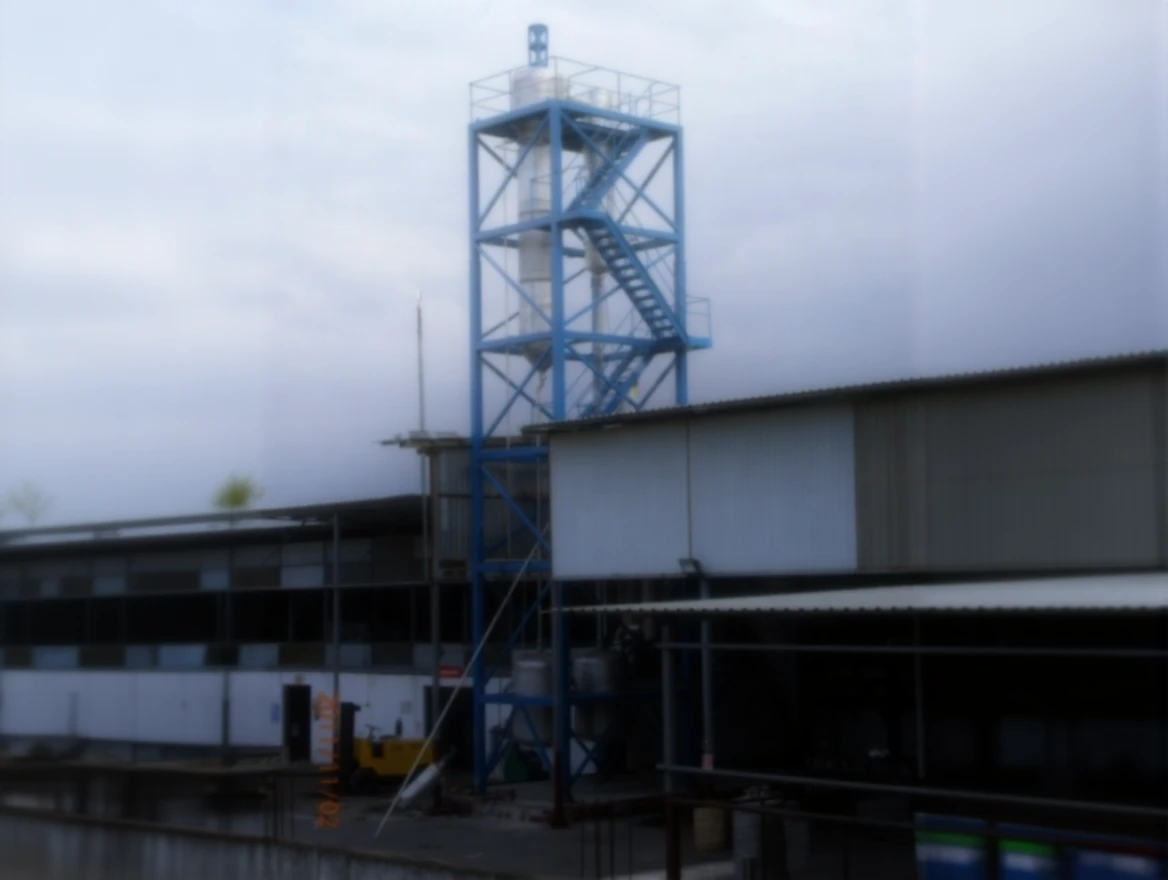
Atılım Makina Thin Film Evaporator Systems
Thin Film Evaporation is based on the principle of removing heat-sensitive or high-viscosity liquid properties by transferring heat along a thin liquid film created by mechanical means.
Thin Film Evaporators successfully carry out the evaporation of substances that are difficult to separate.
In simple terms, it enables the rapid separation of volatile compounds from less volatile compounds through heat transfer conducted without direct contact with the product and mechanical mixing of the fed product.
The short contact time on the heating surface and the high-speed movement of the liquid allow thin film evaporators to evaporate heat-sensitive, viscous substances very successfully.
The Thin Film Evaporator consists of two main parts: a body with a heating jacket and a rotor.
Today, the most commonly used thin film evaporators are those designed vertically.
In a vertically designed thin film evaporator, the feed liquid enters tangentially from the upper part of the heated surface into the evaporator body and spreads towards the inner wall of the evaporator body through the rotor.
The waves created by the movement of the rotor blades generate a highly turbulent flow and optimum heat flow, while the thin liquid film flows downward through a spiral motion/helix from the inner walls of the evaporator.
During this process, volatile compounds evaporate quickly. The resulting vapor moves in the opposite direction to the liquid flow and is ready to condense or enter the next process equipment when it exits the evaporator from the top.
Non-volatile, less volatile components with a high boiling point exit the evaporator from the bottom.
If necessary, vacuum is applied to lower the evaporation temperatures of the components and to operate at low temperatures.
The thin film system is mostly used in the recycling system of waste oils in the industry.
Thanks to the thin film system, waste oils available in the market are purified 100% and converted into ready-to-use oil.
The remaining waste material, even slag, is highly sought after and can be sold in the market.
Related products
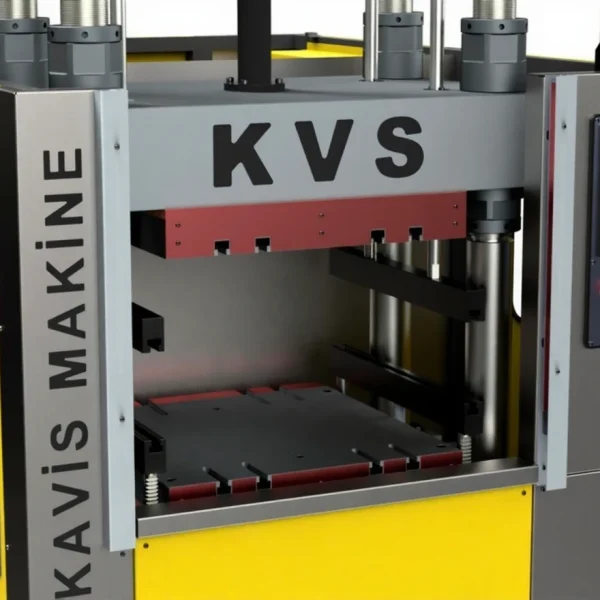
250Ton Rubber Compression Press / Rubber Press / Rubber Baking Press 2Rt/3Rt/4Rt
In stock
| Brand | Kavis |
|---|---|
| Model Type |
Prs / K-250 |