


Modbus PLC System with Communication
| Brand | Fast Makina |
|---|---|
| Model Type |
F-PH001 |
Modbus PLC System with Communication: Reliable and Efficient Solutions for Industrial Automation
Industrial automation systems play an important role in ensuring that production processes become more efficient, safe and controllable. Among these, Modbus PLC (Programmable Logic Controller) systems have a wide range of usage in the world of industrial control and automation and are widely preferred for communication between devices. Modbus is a communication protocol that stands out with its robustness, reliability and flexibility.
What is Modbus PLC System?
The Modbus PLC system allows industrial machines, sensors and other equipment to communicate with each other. Modbus protocol is a communication protocol that facilitates data transmission and provides fast data sharing between industrial devices. In this system, central control is provided via PLC (Programmable Logic Controller) using the Modbus protocol.
Basic Features of Modbus Protocol
-
Open Protocol: Modbus is an open source protocol and has a structure that is open to use and compatible with all manufacturers.
-
Simple Structure: Modbus provides communication with simple data structures and commands, which offers great convenience in terms of installation and maintenance of the system.
-
Flexibility: Modbus, which can work over both serial communication (RS-232, RS-485) and Ethernet, offers flexible solutions by being compatible with different devices.
-
High Reliability: Providing reliable data transmission in industrial environments, Modbus shows high performance even in noisy environments.
How Does Modbus PLC System Work?
Modbus PLC system is basically built on a master-slave structure. While devices in this structure communicate with each other, the “master” device (usually PLC) requests data, while the “slave” devices (sensors, flow meters, etc.) answer these requests. Modbus communication protocol carries out data transmission between devices in a certain order.
-
Master Device (PLC): It is the main device that requests data and sends commands to other devices.
-
Slave Devices: These are devices that send data in response to the request from the master device. These devices can be sensors, motors, valves and other industrial equipment.
Thanks to this structure, multiple devices can share data simultaneously and work in coordination with each other.
Advantages of Modbus PLC Systems
-
Easy Integration: Modbus protocol provides easy integration between devices from different manufacturers.
-
Long Distance Communication: With standards such as RS-485, Modbus PLC systems can transmit data even over long distances.
-
Low Cost: Modbus-based systems generally use low-cost hardware, which offers solutions that fit the budgets of businesses.
-
High Speed Data Transmission: Modbus enables fast data transmission and ensures uninterrupted operation of industrial automation processes.
-
Flexibility: Thanks to its structure that can be adapted to different applications, Modbus PLC systems have a wide range of usage. Scalability and extensibility allow users to customize systems according to their needs.
Application Areas of Modbus PLC System
Modbus PLC systems are widely used, especially in the following areas:
-
Automotive Industry: Used to automate production lines and assembly processes.
-
Energy Sector: Functions to collect and monitor data in electrical panels, generators and other energy management systems.
-
Water Treatment and Distribution: Provides communication between equipment in water treatment plants, pump stations and water distribution systems.
-
Food and Beverage Industry: Used for the management of automatic packaging, transportation and production systems.
-
Salt and Chemical Industry: Provides data tracking and control in complex processes such as chemical processes and salt production lines.
Related products
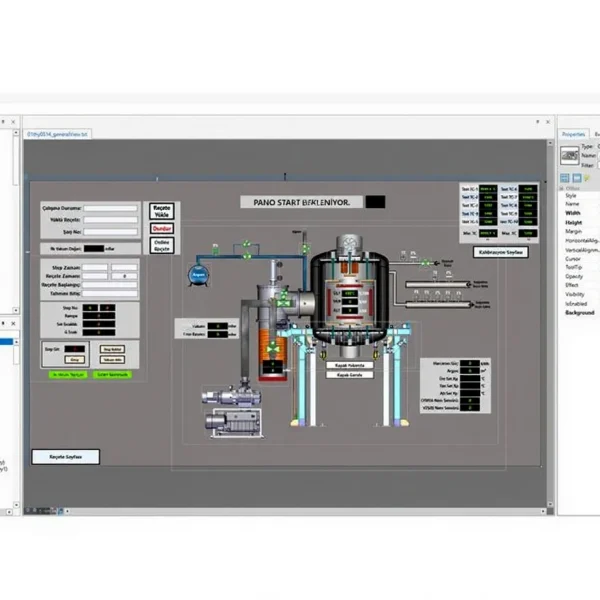
Eagleye Rsd Thermal Processing Furnace Industrial Automation Software
In stock
| Brand | 3E |
|---|---|
| Model Type |
Eagleye RSD |